‘Vibe Analytics’: The Evolution from Questions to Conversations with Data
From Vibe Coding to Vibe Analytics
This shift may send shivers up the spine of Data and Analytics professionals, where it is known all too well that trust in data is hard won, but very easily lost. However it is important to understand where this approach to working with data fits in as a complement to traditional BI and Analytics, rather than as a replacement.
The concept of ‘Vibe coding’ emerged from Andrej Karpathy’s influential X post about a new programming style where developers “fully give in to the vibes” and let large language models (LLMs) write code through natural conversation. In Karpathy’s words:
So what changed?
While “talk to data” solutions have existed for years, they never gained widespread adoption due to technical capability limitations. In short, they weren’t great. Earlier natural language processing (NLP) systems could only handle basic queries and often produced unreliable results. And while still far from perfect, today’s LLM GenAI capabilities have crossed a critical capability threshold, enabling complex analytical conversations that were impossible just a few years ago.
Consider an example: Instead of spending days constructing queries to analyse customer feedback, a business leader can now ask, “From our customer calls, what were the top themes for customers with lower NPS scores?” The system doesn’t just return a simple answer, it engages in a dialogue, surfacing unexpected patterns, suggesting follow up questions, and enabling real-time exploration of emerging insights.
If you have tried to use LLMs or any data specific ‘talk to data’ tools, you’ll know that it still has a way to go, and relies on really solid data foundations to be able to create trustworthy responses (think data quality, metadata, semantic and metrics layers, and well constrained data products), but the trend in the capability is undeniable.
The Fundamental Process Transformation
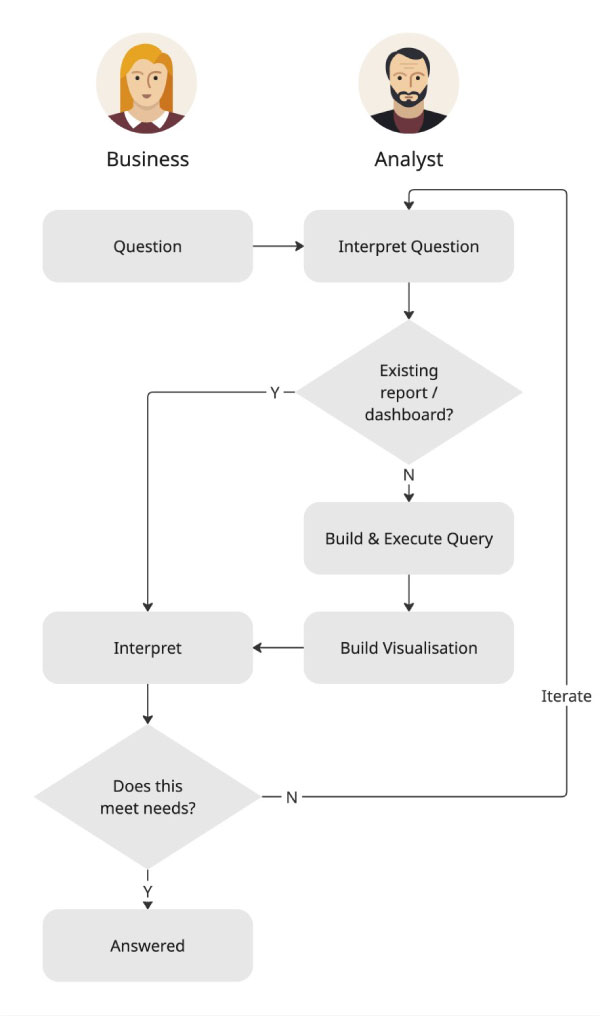
Traditional business intelligence follows a rigid, linear process that creates bottlenecks and often involves a number of handovers and dependencies between teams. The traditional flow involves someone with a business question working with a technical BI or Data Analyst, explaining their question or business problem (usually very poorly), their analyst interpreting this, going away and building queries and data visualisations, sharing this back and iterating on this cycle until their original question is answered.
This approach creates dependencies between those with business questions and those with the technical skills to be able to answer them, creating lost in translation problems and limits real unfettered exploration of data.
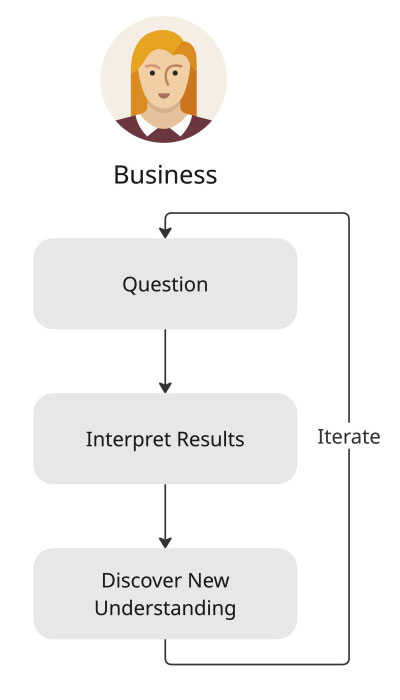
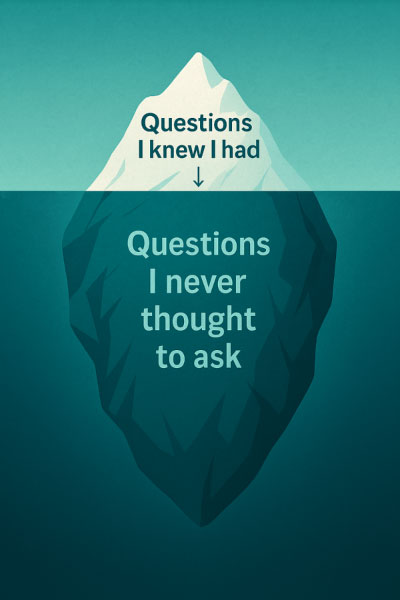
The improvisation aspect is crucial. Where traditional analytics asks static, constrained “What happened, why?” questions, vibe analytics allows for collaborative exploration to uncover both new answers as well as new questions. This combination of human intent and curiosity, with machine pattern recognition often reveals new insights that neither alone would discover.
Democratising Data Access
One of the most significant implications is the democratisation of analytical capabilities. Business users can increasingly explore and understand their own data without waiting for intermediaries to translate their questions into technical queries and data visualisations. This shift eliminates the frustrating hop between business needs and technical implementation.
The Evolution of BI and Data Analytics Roles
While this shift doesn’t eliminate the need for traditional BI and Data Analyst roles, it will transform some roles in two critical directions:
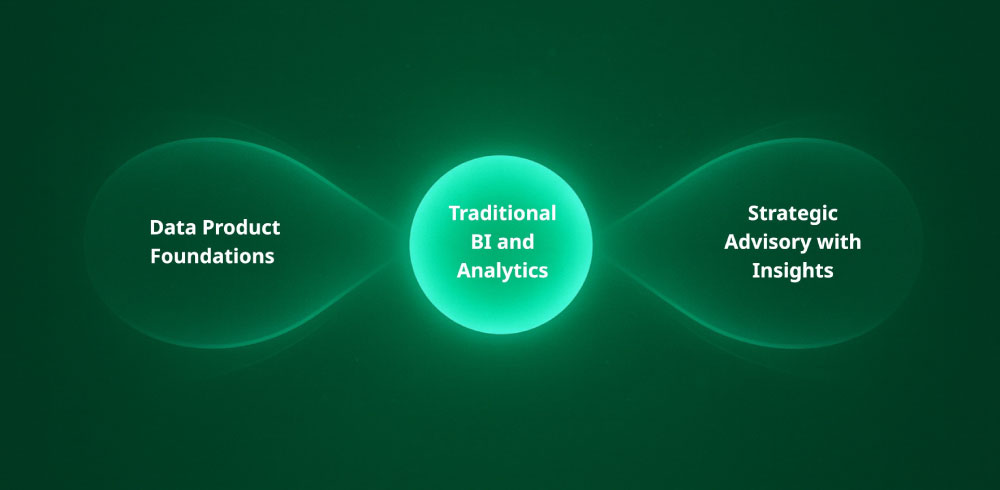
Second, some will evolve toward strategic advisory roles using the insights gained. Instead of spending time translating business questions into technical queries, they can focus on helping organisations understand what their new found answers mean and how to act on insights.
There is also the ongoing need for deep Data Analytics skills to validate data, assumptions and insights for high impact decisions and actions that may follow from discoveries made through.
Critical Success Factors
Michael Schrage shared the below caution in his MIT Sloan Management Review article: Vibe Analytics: Vibe Coding’s New Cousin Unlocks Insights:
- Data foundations – Ensure the underlying data is of high quality; good metadata is present including field level names with meaningful descriptions and synonyms if relevant; semantic and metric layers are used as required.
- Start small – Provide focused data with specific use cases in mind. Start with a small set of limited questions that you anticipate being asked, and then evolve and grow that as required.
- Provide good examples and instructions – When setting up the space for users to interact with, provide a limited, focused set of instructions including example sql queries where possible.
- Self test and iterate – Have a suite of test benchmark questions, and fine tune responses with specific feedback and feedback until you are getting reliable responses
- Test with a small group of users – Choose a small group of users to initially beta test with. Ensure they know their job is to help evaluate and train the model. Set expectations on the scope of the questions they should be focussing on and have them upvote, downvote and provide additional feedback on responses
- Monitor in production – Ensure ongoing ownership of model is clear and that performance against benchmarks are monitored. Make sure users are using common sense and know the limitations of this approach. If critical decisions are being made based on responses, ensure results are validated accordingly.
Where to from here?
Success requires both technical capability and cultural adaptation. Teams must learn to ask better questions, follow unexpected threads, and synthesise insights from this conversational exploration.
As we see capabilities continually improving with every model release, vibe analytics offers a glimpse into a future where data becomes a collaborative partner in discovery rather than a passive resource to be queried.
This shift mirrors the evolution from manual queries to automated monitoring systems, but with exponentially more sophistication. Agentic Analytics doesn’t just flag predetermined thresholds, it can dynamically discover what should be monitored based on evolving business contexts and emerging data patterns.
Beyond making people aware of actual or forecasted changes in data, agentic integration also allows for automated hypothesis testing as well a strategy formulation. Instead of a human having to define questions, create a hypothesis to explain causality, and then work to formulate a business strategy to react to the change, an agent might observe:
- Observation: Customer acquisition costs increased 13% in Q3, but this correlates with higher lifetime value.
- Hypothesis: We’re attracting more premium customers.
- Validation: Testing through cohort analysis and behavioural segmentation, calculating customer lifetime value trajectories with 90% confidence intervals to validate the premium customer thesis
- Recommendation: Allocate more resources to acquisition channels or campaigns that are driving premium customers, as higher lifetime value offsets the increased acquisition costs.
- Action: Run channel-level analysis to identify which platforms (e.g., paid search, social ads) are over-indexed for attracting high-value customers. Pilot A/B tests to validate strategy.
This blogpost was originally posted on Bryn’s LinkedIn in August 2025 and Bryn gave a Deep Dive session on this topic at AgileAus26. Images were sourced from the original LinkedIn post.

Stay in the loop
To receive updates about AgileAus and be subscribed to the mailing list, send us an email with your first name, last name and email address to signup@agileaustralia.com.au.
The Three Reinventions
What am I actually built on? AI is now forcing that question on every knowledge worker, every leader, every organisation. And my answer to it matters more than it has at any previous point in my career.
Reinvention one: by instinct
My first reinvention was not strategic. It was instinctive. I was drawn to roles where I had to build things, solve problems that crossed functional lines, and learn fast. That pattern put me in the deep end in a range of roles across multiple countries, spanning multiple industries. Each context looked different on the surface, but shared something underneath.
One of my leaders saw this before I did. Early in my career, James Kim told me something I did not fully understand at the time. He said he could put me in any role, in any company, in any industry, and I would figure it out. It took me years to understand, believe and feel what he saw.
What transferred across every context was not domain knowledge. It was the ability to walk into unfamiliar territory, read the system, build the relationships, and deliver. The thing that moved with me was not what I knew. It was how I learned.
Reinvention two: by design
My second reinvention started with a tool and became something more fundamental. When I completed CliftonStrengths for the first time, it gave me language for what had been driving my career all along. My top talents were not personality traits. They were the operating system I had been running without being able to name it.
That clarity changed how I made decisions. But the sharper shift came from a conversation over a cup of tea.
Andrew Walduck, a leader I turned to often for career perspective, said something that has stayed with me since. “Hope is not a strategy, Nat.” He was not being unkind. He was being precise. He told me I needed to stop waiting for the right opportunity to find me and start being clear about three things: what I had done, what I excelled at, and what I wanted to do next.
So I wrote it down. I created a document I called “Hope is Not a Strategy”: a clear articulation of my strengths, my purpose and my values. I revisit it every year to update what I have done and what I want to do. When I can say with clarity that my purpose is to create more than I consume, and that where I add most value is building high-performance teams that can create an ambitious vision AND execute, I stop applying for roles and start designing my contribution.
Reinvention stopped being something that happened to me. It became something I practised. What made the difference was this: reinvention without self-awareness is just movement. You accumulate experiences rather than compounding them. When reinvention is anchored in purpose and strengths, each move builds on the last. You unlock a different kind of energy: one that comes from progressing your purpose, not just your career.
Reinvention three: by necessity
I have spent twenty years leading digital transformation. I thought I understood what it meant to lead through technological change. AI has humbled that assumption.
The pace is not just faster. It is qualitatively different. The technology I am using today did not exist six months ago. The technology I will be using in six months probably does not exist yet. The old model was to build expertise, rise through the ranks, and protect your position. It no longer holds. What you know is worth less each cycle. How you learn and adapt is worth more. Your current position is not a place to protect. It is a platform to launch from.
The risk I am most alert to is what I think of as the empty loaf problem.
Imagine a village where a machine arrives that can bake perfect sourdough in seconds. The baker, delighted, stops feeding his starter. He stops kneading by hand. The apprentice never learns to feel when the dough is ready. The bread looks the same. But there is nothing inside. When the machine breaks, there is no craft to return to.
The same risk exists when leaders delegate their thinking to AI. The output looks coherent. The communication sounds polished. But the underlying craft quietly atrophies: the ability to ask the question nobody else thought to ask, to push past the first coherent answer to the truer one beneath it, to synthesise complexity, to make a judgment call under pressure, to see what the data cannot yet confirm. You produce the loaf without cultivating the starter.
This is not an argument against using AI. I use it extensively but deliberately. The argument is about what you choose to protect.
The thread
If I zoom out across all three reinventions, the pattern is this: through each reinvention, what I had to let go were the things tied to a specific context: roles, titles, domain knowledge. What I held onto were the things that are most distinctively mine: the ability to learn anything and draw energy from that process; to take something broad and ambiguous and break it into something that can actually be executed; to understand what people need, not just what they ask for; to build relationships where real trust and real results coexist; to hold both the vision and the execution without losing sight of either. These are not just capabilities. They are my strengths: the expression of how I am wired to think, to lead, and to learn.
AI can augment every one of those strengths. It cannot replace them.
The difference between reinvention that compounds and reinvention that drifts is whether you know what you are building on. Your purpose. Your strengths. The things that do not change even when everything around you does.
AI is going to force this question on every knowledge worker: what are you actually built on? If the answer is your title, your technical skill or your current role, you are standing on shifting ground. If the answer is deeper than that, you have something solid to build from.
I am building again. It is uncomfortable. Again. And I am more certain than ever that this is exactly where I am supposed to be.
What are you protecting in this reinvention, and what are you prepared to let go?
This blogpost was originally posted on Natalie’s LinkedIn in March 2026.
Stay in the loop
To receive updates about AgileAus and be subscribed to the mailing list, send us an email with your first name, last name and email address to signup@agileaustralia.com.au.
Deprecated: Creation of dynamic property ET_Builder_Module_Comments::$et_pb_unique_comments_module_class is deprecated in /home1/agileau1/public_html/wp-content/themes/Divi/includes/builder/class-et-builder-element.php on line 1425
The Work That Builds Trust
Whatever happened to trust?
One of my favourite thinkers, Rachel Botsman, defines trust as “a confident relationship with the unknown.” She’s spent over fifteen years studying trust, and the insight she keeps returning to is this: the greater the uncertainty, the more trust you need.
In my joyous role steering the AgileAus conference for almost twenty years, I’ve witnessed people and organisations striving to adopt better ways of working. It has been inspiring to hear the many stories of people trusted to own their work, deliver something valuable to customers, and learn from it along the way. Lately, however, I have found myself wondering whether something is slipping – I think we all feel it. And perhaps the thing slipping fastest of all is trust.
The trust problem
I spoke to a friend recently who got in early to work so he could leave early to meet his child’s needs – and then was quietly warned by his manager that this behaviour ‘gives the wrong impression’. Another friend is too scared to speak up in meetings as the goalposts keep moving and she’s afraid to say the wrong thing, with another frustrated by the time she spends waiting for approval on even the smallest decisions.
These are not isolated moments – they’re what Botsman would call a breakdown of trust. She says it can be very confronting for leaders to recognise that their need for control is itself a form of distrust. The micro-managing, the presence-as-performance culture, the processes that reward activity over outcomes – these are all withdrawals of trust that accumulate.
There is a national conversation about productivity and innovation, though sometimes I think we can miss the point that it all happens through people. Too often we use the words ‘talent’, ‘workforce’ and ‘headcount’ – but innovation and productivity actually walks on two legs! And many people are not thriving – so they cannot do their best work.
Of course, there is the load of the world weighing on many, but in the world of work, the impact is clear: mental health compensation claims have grown 161% over the past decade, and crossed the $1 billion threshold five years ahead of projections. Beyond that, there is evidence to suggest people are disengaged and not proud of their work or their workplaces. Culture Amp’s 2025 research, across 3.3 million employees, finds that what’s happening is “quiet cracking”: a slow erosion of pride, energy and motivation that doesn’t show up as someone leaving, but as someone slowly hollowing out. SEEK’s 2025 Workplace Happiness Index found that nearly half the Australian workforce is somewhere between neutral and unhappy, and 1 in 3 regularly dread going to work.
People aren’t quitting – the job market is too precarious for that – they’re cracking. Adam Grant describes quiet cracking as “the new term for silently disengaging from a job that slowly breaks your spirit”. Organisations that mistake retention for engagement are missing the problem – and the opportunity – entirely. Much of this quiet cracking is rooted in the slow erosion of trust. When people feel they aren’t trusted – to make decisions, to manage their work, to speak openly – their engagement, motivation, and pride quietly drain away.
Botsman is right that trust is not just declining; it has been displaced. The old model, where trust flowed top-down and leaders expected to be trusted by virtue of their position, is breaking. Trust has to be earned through behaviour, through transparency, through actually letting people do their jobs. Botsman writes that trust is the conduit through which all new ideas travel. You cannot get good work, let alone innovation, out of people who don’t feel trusted.
The AI layer
Mike Walsh, the insightful Australian futurist and author of the book, The Algorithmic Leader, has been saying for years that “AI should change what we do, not just how we do it.” Organisations that bolt AI onto how they already work without changing their structures, their culture, or how much they trust their people won’t get the uplift they’re hoping for. They’ll get the same organisation, slightly faster perhaps, but with a much bigger technology bill.
I am curious how many organisations struggling with AI are running into the same problems they faced when introducing better ways of working in the past. Perhaps the questions need to shift from not only “How do we use this?” but to “What does this mean for how we work, how we deliver, and what capability actually looks like now?”
This is the Work
The skills that matter most, such as iterative delivery, cross-functional collaboration, continuous learning, and working in genuine uncertainty, are not being replaced by AI. They are the prerequisites for AI actually working.
As Botsman says, trust is earned through behaviour, integrity and actually letting people do their jobs. The organisations that get this right – that build distributed trust rather than clinging to control – are the ones that innovate, adapt, and create real value. They are also not coincidentally the ones making the most of AI.
Building this adaptive organisation is hard, and it’s a journey that never ends. Every decision, every interaction is an opportunity to strengthen trust.
The agile mindset remains the compass. It guides how we collaborate, how we learn, and how we make intelligent tools actually useful. Right now, investing in trust is the work that truly matters – and it’s work worth doing.
P.S. We’ll be doing the work at AgileAus26, Melbourne, 19–20 May 2026.
Stay in the loop
To receive updates about AgileAus and be subscribed to the mailing list, send us an email with your first name, last name and email address to signup@agileaustralia.com.au.
Summer Reads for Reflection, Learning, and Growth
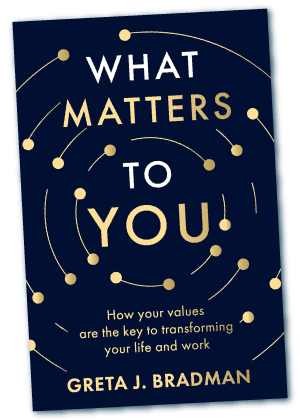
What Matters to You – Greta Bradman
Need some time to reflect on what matters most as you shape your own “life well lived”? This book is a beautiful companion for doing just that. Greta Bradman unpacks how our values influence the way we see and respond to the world, often without us realising. For those in the audience when AgileAus20 finally happened (in December 2021!), you’ll remember how lucky we were to have Greta deliver a keynote. Her calming, insightful presence on stage shines through in this thoughtful read.
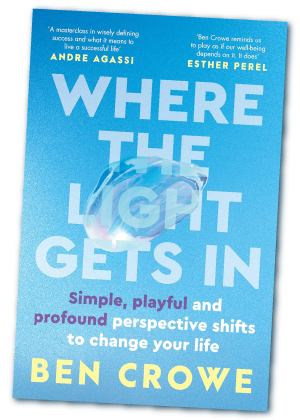
Where the Light Gets In – Ben Crowe
Ben also delivered a standout keynote at the very tardy AgileAus20, delivering exactly the message we needed at the time. His book offers the same blend of warmth, clarity and playfulness. A perfect holiday read for anyone seeking renewed purpose or a shift in perspective.
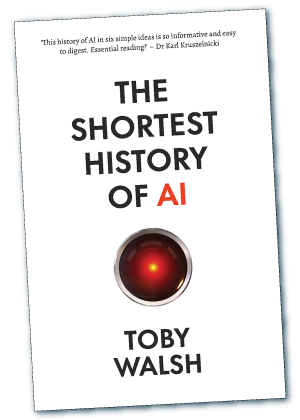
The Shortest History of AI – Toby Walsh
If you haven’t yet discovered the Shortest History series, you are in for a real treat! Brilliant thinkers take massive topics and distil them into lively, digestible reads. Toby Walsh’s take on AI does exactly that. A perfect primer for all of us as we build our intelligent futures.
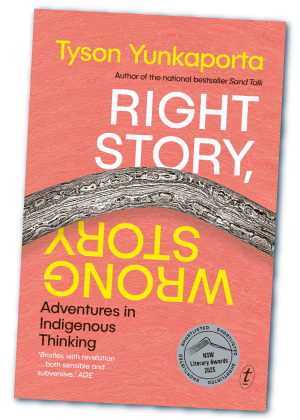
Right Story, Wrong Story – Tyson Yunkaporta
For the many who loved stepping into Tyson’s mind in his first book SandTalk, this will be an obvious choice! Right Story, Wrong Story offers an original exploration of how we teach, learn and think together, inviting us into deeper ways of communicating and imagining that align more closely with land, creation and collective understanding.
P.S. Keep an eye out for these two books to be published in 2026 – Penelope Barr’s Win the Night to Win the Day and Jon Whittle’s AI for Business.
Stay in the loop
To receive updates about AgileAus and be subscribed to the mailing list, send us an email with your first name, last name and email address to signup@agileaustralia.com.au.
Why Agility Matters More Than Ever
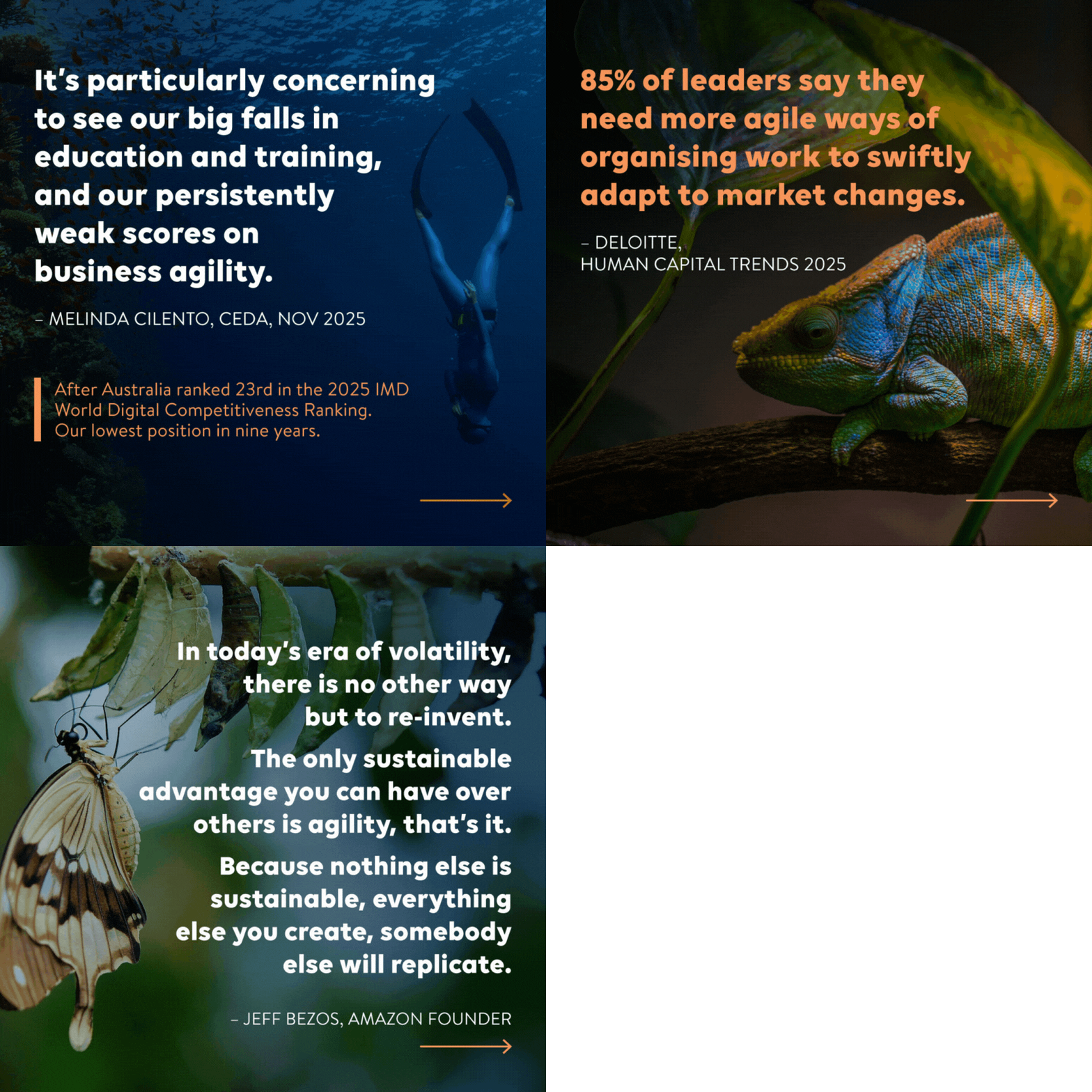
And while this is a national challenge, it is also one for each and every organisation. Deloitte’s 2025 Global Human Capital Trends report highlights a growing tension: workers are seeking more clarity and confidence in how they work, while at the same time 85% of business leaders say organisations now need more agile ways of organising work to adapt swiftly to change. Leaders may want to move fast, yet many of those they lead don’t yet feel prepared.
This tension is at the heart of modern leadership: people are key, and they need reassurance, but they also need their capabilities developed to feel equipped for what is ahead. It’s finding this balance that defines truly adaptive organisations.
Agility is foundational. It’s the advantage that lasts.
As Jeff Bezos famously put it:
Why AgileAus26 Cannot Come Soon Enough
For me, AgileAus26 feels like it might be the perfect moment for a collective reset. A chance for all of us to retool, reconnect, and explore how we reinvent the way we work.
It’s when we reaffirm what we already know that the true drivers of productivity are people: people who are well led, who work well in teams, and who collaborate effectively across teams.
And it’s why the focus at AgileAus26 will be on how organisations can build the capabilities and unlock the potential of the people at the heart of productive, intelligent, adaptable workplaces.
AgileAus26 is to be held at the iconic MCG over the 19th and 20th of May 2026 to explore how we will shape the future of work. Speakers locked in already include – Adam Boas, Nigel Dalton, Sharon Parker, Adel Smee – you can discover more here about our plans and access early-bird tickets until the end of January 2026.
Expressions of interest to speak at AgileAus26 are open from 1 December 2025.
Stay in the loop
To receive updates about AgileAus and be subscribed to the mailing list, send us an email with your first name, last name and email address to signup@agileaustralia.com.au.
Paramedicine, like agility, is a team sport
Big thanks to guest blogger Caidyrn Roder who has shared his unique perspective alongside his paramedic co-speaker (and uncle!) Nick Roder, at AgileAus – not once, but twice.
Ambulance Victoria employs over 5,000 paramedics to provide emergency health care across the state. These paramedics are all trained to work outside of the hospital environment, which means that they have no defined workplace, limited managerial oversight and they are often remote from support.
And yet their performance is nothing short of remarkable. In 2023 – 2024, they attended over one million incidents. And 97% of patients surveyed reported that their experience was positive, and that they felt safe and cared for1.
So when I learned about this, I got curious. How do they collaborate? How do they deal with the complexity? And what can we borrow from them to improve how we work in organisations?
So, the question you need to ask yourself is this: Does your organisation work with its people or against them?
In my opinion, the answer for many organisations is that they unintentionally work against their people.
I believe that we can learn from paramedicine, adapting the techniques that they use to create high-performing teams. Once we accept that people are our delivery system, we can work with them them by doing the following 4 things:
Design processes for humans
Paramedics deal with cases that range from interhospital patient transfers to accidents to search and rescue. They have complex protocols and procedures which they have to perform under pressure. They work with people that they may have never met before. And all of this in challenging environments like accident scenes, remote areas or residences with access issues.
In response, paramedics have developed a range of tools that provide a systematic approach, constructed in a way that recognises that they will be deployed in a range of contexts while keeping the needs of patients and paramedics at the centre. In other words, they design processes for the humans who are involved.
Consider your organisation for a moment. I’d wager that you also have to deal with complexity. Do you have processes that don’t serve the people who use them? Or aren’t documented? Or are documented but not followed? The insight that I think we should take from paramedicine is that processes that are not designed for humans, will not be used by humans.
The good news is that there are simple steps that you can take to design processes for the humans in your organisation.
- Listen to your people – Talk to your teams. Talk to your people leaders. Talk to your executives. Listen carefully to understand the current context, what’s working well and where there are opportunities to improve.
- Involve the people who do the work – The people who understand the work and the environment are the best ones to (re)design the processes. So make sure that you involve them. Better yet, empower and support them to continuously improve the processes themselves.
- Prioritise simplicity – When you’re designing process changes, challenge yourself to make them as simple as possible. Could you have fewer steps? Do you really need to involve all of those people in a decision? When faced with a choice, prioritise creating a simple process that covers 80% of cases over a complex one that covers 100%.
- Continuously improve – I hate to be the one to tell you this, but you won’t get your processes right the first time (or even second, third or fourth). So build in continuous improvement from the start by creating an environment that encourages your people to continuously try new ways of collaborating.
Create a just culture
Continuous improvement is not just important for paramedics, it’s non-negotiable. For them, raising concerns can lead to valuable changes in practice that improve outcomes for patients and paramedics. This is only possible in an organisation that both makes it safe for employees to speak up, and is prepared to listen.
In other words, continuous improvement is about much more than just processes and tools. You can’t simply tell teams to do retrospectives or to implement tools like lean A3s and leave it at that. To unlock the true power of continuous improvement you need to create a culture where people are comfortable talking about and learning from their mistakes. A culture where people are empowered to change the way they work and to challenge existing practices.
Paramedics call this a just culture. A just culture means that people are able to raise concerns, mistakes or challenges within the organisation in an environment that treats employees with due respect. A just culture recognises that human error is inevitable and that complex systems designed by humans will fail2. There is shared accountability between the organisation (the system) and the individual when things go wrong.
In a just culture, you don’t blame or punish individuals when their actions or decisions are commensurate with their experience or training. Instead seek to understand the broader context for their actions so that you can identify improvements. This is not the same as a no-blame culture. People are still held accountable for their actions, and negligence and willful misconduct are not tolerated.
There are 3 simple things that you can do to foster a Just Culture in your organisation3.
- Support the people involved – When something goes wrong, your first priority should be to support the people involved. Making a mistake is rarely a positive experience, however a supported employee is more likely to resolve their experience productively and learn and grow as a result. They are also more likely to talk about mistakes in the future.
- Manage your biases – Give people the benefit of the doubt by assuming that they set out to do their best and achieve a good outcome. When someone makes a mistake, put yourself in their shoes to ensure that you are empathetic to them. Try asking yourself this question: Could another person with similar knowledge and experience make the same decision in the same situation?
- Consider the system – Rather than focusing solely on individuals and their actions, you need to recognise that they are working within a broader context. Remember, a Just Culture recognises that there is shared accountability between the organisation (the system) and the individual when things go wrong. So ask: What aspects of the system contributed to the actions they took, and the decisions they made? Why did it make sense to them at the time?
Foster civil interaction
There is a growing body of evidence in both medicine and business that rudeness and incivility undermine team effectiveness. In their 2015 study, Riskin et al concluded that “not only does rudeness harm the diagnostic and procedural performance of [medical] practitioners, it also seems to adversely affect the very collaborative processes that might otherwise allow for teams to compensate for these effects”4. In other words, incivility affects both an individual’s cognitive abilities as well as their ability and willingness to collaborate with and help others.
Incivility includes overt behaviours like mocking, teasing or insulting. Or yelling, slamming doors, or talking about people behind their backs. It can also be more subtle behaviours like responding to emails in a meeting, not smiling or acknowledging others when you pass them in the hall or not listening when someone is speaking to you.
Importantly, perceptions of incivility can vary from person to person. What one person finds rude, might be totally acceptable to another person.
Incivility is a common cause of stress in the workplace. For example, given that paramedics often work in traumatic circumstances you might expect their main cause of stress to be the work itself. However, they often report that how people behave has a larger impact on their stress levels.
Rudeness can also lead to reduced creativity, lower productivity, increased absenteeism, lower quality of work and in the worst case, employee churn and damaged customer relationships.
Interestingly, the impact is not just on the person on the receiving end of the behaviour. People observing uncivil behaviour are also impacted. So, if a team lead is rude to a team member in a meeting, the whole team’s performance may suffer as a result.
The implications for organisations are profound. Fostering civil interaction not only supports staff wellbeing, but it can also improve team effectiveness. So what can you do to foster civil interaction in your organisation?
- Model good behaviour – Be conscious of how you interact with your colleagues and hold yourself to a high standard. Avoid mocking, teasing or insulting people. Even if you think that it is “good natured” it’s possible, even likely, that others don’t see it that way.
- Ask for feedback – Feedback is a good way of monitoring how you’re doing. It helps you improve by giving you other perspectives, and it builds psychological safety and encourages a growth mindset in those around you.
- Establish team or company norms – Norms are an agreed set of behaviours that are acceptable in your context. They help you be clear about what behaviour is expected and what won’t be tolerated.
- Take bad behaviour seriously – Organisations who don’t address rude behaviour often pay the price. When leaders ignore bad behaviour, they are giving their implicit approval of the behaviour. Staff stop reporting incidents because they feel that nothing will be done. The behaviour continues unabated, stress levels increase and often the simplest solution for staff is to quit.
- Include civility in recruitment and employee training practices. Look out for indications of rude behaviour in interviews. Get multiple perspectives by involving team members in the interview process. Make people aware of the concepts and the impact in training
Manage your authority gradient
Authority gradient is a concept borrowed from the aviation industry and adopted by medicine and paramedicine. It refers to the established, or perceived, command and decision-making power hierarchy in a team or organisation5. It is the status difference (real or perceived) between 2 or more people in a team.
At one end of the spectrum, an extremely steep authority gradient is where an individual holds all of the power. An example is a team lead who has a controlling or prescriptive management style – “it’s my way or the highway”. Team members are expected to do what they’re told and not ask questions or express opinions. This results in fewer perspectives and ideas, reduced communication and collaboration, lower team engagement and an environment where feedback is not given freely.
At the other end, an extremely shallow authority gradient is where everyone’s opinion is valued equally on all topics. There is no difference between experienced senior team members and more junior ones. Everyone’s voice is heard and feedback is given freely, but decision-making may be slow and/or poor and responsibilities may be unclear.
Studies show that getting authority gradient wrong can have disastrous results. I’ve seen the impact on teams and organisations myself. I once worked with a team developing a proof of concept for a new digital product with the primary purpose of learning what users wanted. The cross-functional team was talented and experienced, but they were hamstrung by a leader who had an authoritarian leadership style and a fixed view of how things should be done. The team did not feel safe to suggest a better approach, so they followed the leaders directions slavishly. The result was a lot of wasted money and effort and very little learning.
Authority gradient is also particularly important for work on complex problems (i.e. most of the work we do in organisations), because this entails a high degree of uncertainty and risk. In organisations we often have to make decisions based on incomplete information, under conditions of high uncertainty and risk, where there is no obvious right or wrong answer, where people hold conflicting opinions and decisions and actions are only proven right or wrong by the results they achieve.
Interestingly, the concept of managing an authority gradient challenges traditional views on leadership. All paramedics can be both leaders and followers, adjusting dynamically depending on the situation. For example, it’s not uncommon for the first crew on an accident scene to retain the leadership role, even when a more senior paramedic arrives. They may even enlist that more senior person as a ‘follower’, leveraging their skillset to get the best outcomes for their patient.
Being a follower does not mean passively following orders. In high-performing teams, followers anticipate the next step, offer different perspectives and solutions and demonstrate initiative.
There is no single “correct” authority gradient for a team or organisation. It changes based on circumstance. The most effective teams are conscious of their authority gradient and have protocols in place to adapt it dynamically. So while there is no one-size-fits-all approach, there are some heuristics that you can use to determine what is appropriate for the circumstance.
- Shallow authority gradient – Well-suited to dealing with complex problems. Creates a space where team members feel safe to contribute ideas, ask questions, challenge each other and debate solutions. A shallow gradient also helps to create a learning environment because people are more likely to give feedback and share learnings when things go wrong.
- Steep gradient – Appropriate in times of crisis, when fast decisions made by an experienced leader are more important than getting a range of perspectives. Be careful not to maintain a steep gradient for extended periods of time as this often makes teams less productive and reduces learning, morale and engagement.
Conclusion
Paramedics consistently achieve remarkable results in high-pressure, complex environments because they understand that people are their delivery system. Organisations seeking to emulate this level of performance can draw profound lessons from the field of paramedicine. By designing processes for humans, organisations can empower their workforce to operate efficiently even in complex scenarios. Furthermore, cultivating a just culture that not only tolerates but actively encourages learning from mistakes is paramount. This creates an environment where individuals feel safe to speak up, share insights from failures, and continuously improve, rather than hiding errors due to fear of blame. Promoting civil interaction within teams is also crucial, as incivility erodes trust, impairs cognitive function, and undermines collaboration. Finally, consciously managing the authority gradient – adapting it dynamically to the demands of the situation – allows for optimal decision-making and leverages the diverse expertise within a team.
Ultimately, investing in these human-centric principles will not only improve internal processes; it will unlock the full potential of your people.
Stay tuned for more information on AgileAus26 – we cannot wait to gather with curious minds and rethink the way we work and live!
2 Safer Care Victoria, Just culture in adverse event reviews factsheet, accessed 30 Sep 2024
3 Safer Care Victoria, Just culture guide for health services, accessed 30 Sep 2024
4 Riskin et al, 2015, The Impact of Rudeness on Medical Team Performance: A Randomized Trial
5 Skybrary, Authority Gradients, accessed 27 Nov 2024
Stay in the loop
To receive updates about AgileAus and be subscribed to the mailing list, send us an email with your first name, last name and email address to signup@agileaustralia.com.au.
Gathering builds our capability
People shared stories – on stage, over coffee, and in the hallways. And I was reminded, yet again, that in person, there’s a different kind of honesty: a willingness to admit uncertainty, to ask better questions, to speak openly about the hard stuff.
Capability is more than skills. Capability is also mindset, judgment, and the ability to adapt and deliver value in real time. Capability shows up in how we manage, how we learn from each other, and how work gets done. It’s what enables teams to adapt quickly, solve problems collaboratively, and turn ideas into value. And there’s something uniquely powerful about being in a room together. It creates space for learning, for shaping the supportive cultures we need as individuals, organisations, and industries to thrive in times of change.
Productivity isn’t just about output. As Assistant Minister Andrew Leigh put it in a recent speech, productivity is about “improving the rhythm and texture of daily life.” Productivity comes from how workplaces are run – what they prioritise, how they empower people, and whether they build trust. Shared curiosity and context unlock our productivity, helping us deliver more value with less.
At AgileAus25, I was grateful to hear international voices offer fresh perspectives on a world in motion. And I was inspired by stories from people working in sectors far from my own- medicine, retail, cosmetics, pet care. These stories expanded and shifted my thinking on everything from trust and leadership to AI and work design. At gatherings like AgileAus25, we’re reminded of what’s possible when people are empowered to experiment, to iterate, to own their work.
Right now, AI is both a shiny promise and a messy reality. Organisations are at wildly different stages on their AI journeys. And many are still unsure how to design work that genuinely delivers productivity. Gatherings like AgileAus help move us beyond hype to grounded conversations about implementation: How are teams using generative AI? What’s working? What’s not? Where are the blockers? How are we embedding AI into workflows in ways that are useful, ethical, and human?
Natalie Field, CEO of .id (informed decisions) and a past AgileAus speaker, recently warned that we’re at risk of losing the learning curve altogether. As AI accelerates, the foundational experiences that help people build judgment, context, and leadership are vanishing. Entry-level roles are disappearing, and people aren’t getting the exposure they need to grow into the roles we say we want them to fill. No amount of clever tooling can replace the tacit knowledge and culture-building that happens person to person. Tools don’t grow trust. People do.
That’s why I believe in-person gatherings are a valuable part of building our learning curves. Whether it’s a brown-bag lunch or a national conference, these IRL occasions give people a chance to try out their voice, hear other perspectives, and realise they’re not alone in the challenges they face.
Natalie Field poses a powerful question: How are you and your organisation balancing AI-driven productivity with capability development? The answers may live in those trust-filled exchanges found at gatherings that prioritise sharing: “Here’s what we tried,” and “Here’s what we’d do differently next time.”
Assistant Minister Andrew Leigh made a similar point in his speech, The Progressive Productivity Agenda:
“Productivity is not an abstraction—it’s the sum of what individuals can contribute, adapt to, and create. When we invest in people, we invest in productivity.”
You can read the Hon Andrew Leigh MP Assistant Minister for Productivity, Competition, Charities and Treasury’s speech – The Progressive Productivity Agenda – here:
https://www.andrewleigh.com/speech_the_progressive_productivity_agenda
Natalie Field, CEO, Informed Decisions shared what she had written in their newsletter on LinkedIn here: https://www.linkedin.com/feed/update/urn:li:activity:7343796294735273987/
Stay in the loop
To receive updates about AgileAus and be subscribed to the mailing list, send us an email with your first name, last name and email address to signup@agileaustralia.com.au.
The top 5 reasons your peers are heading to AgileAus25
But why are so many making the trip?
We asked attendees what’s drawing them to AgileAus25, and here are the top five reasons they shared:
1. To stay up to date with leading change in the Agile community
Staying relevant means staying connected. AgileAus25 is where changemakers, thinkers and doers come together to share what’s working, what’s next, and how to lead through change with confidence.
2. To hear insights from inspiring thought leaders on the future of work
AgileAus25 brings together experienced voices from across industries to explore how we can adapt and thrive. With speakers from organisations like Bayer, Suncorp, Nine, Australian Redcross Lifeblood, and UpBank, you’ll gain valuable perspectives to help shape how your team and your organisation reimagine how to meet today’s needs.
3. To soak up best practices and gather new tips and tricks
Whether you’re in delivery, product, design, or leadership, AgileAus25 offers practical, actionable insights you can take straight back to your team. From insightful talks to lightning talks to interactive Play & Do sessions and deep dives, you’ll not only walk away with a toolkit full of fresh ideas – but thoroughly enjoy the process!
4. To discover the latest industry trends and work smarter, not harder
AgileAus25 is your chance to explore emerging tools, techniques, and perspectives that help motivate teams to work smarter and do better work. It’s not just about efficiency – it’s about creating real value and finding better ways to delight customers.
5. To connect with like-minded people (and have fun doing it)!
AgileAus has always been about the vibe! From the Welcome Reception to the Closing Drinks, AgileAus25 offers plenty of chances to meet new people, share experiences, and build connections that last beyond the Conference.
Don’t Miss Out
AgileAus25 is an opportunity to rethink how you work, recharge your team, and network with people who are passionate about doing great work.
Registrations are open now – and with 10% off for teams of 5 or more, there’s no better time to secure your place.
Register today and be part of the magic mix!
Stay in the loop
To receive updates about AgileAus and be subscribed to the mailing list, send us an email with your first name, last name and email address to signup@agileaustralia.com.au.
Harnessing AI at AgileAus25
Here’s a peek at three sessions designed to help you build what customers truly crave:
Unlocking the power of AI for your customers
with Pilar Esteban – Everest Engineering
Where do you start with AI? In this hands-on (‘Play & do) session, you’ll cut through the fluff and get to the heart of what makes AI valuable: solving real problems for real people.
You’ll discover:
- Impactful, customer-focused use cases
- How to evaluate AI ideas with a sharp, practical lens
- How to get your team excited and aligned on the journey!
Perfect for product folks, engineers, and leaders alike, this session provides a framework to move forward with confidence – and to build products that delight your customers.
Feel better, deliver better with GenAI
with Evan He & Laura MacFadyen – Suncorp
At Suncorp, a passionate community of doers brought GenAI to life – not through top-down mandates, but through trust, experimentation and heart.
Laura and Evan will share:
- How small wins built big momentum
- How they used role-based handbooks to scale
- How they kept delivery fast and safe with simple guardrails.
You’ll leave inspired, with practical takeaways and real-world examples to help you kickstart or accelerate your own GenAI journey – no big budget or long timelines required.
There’s no point going fast if you’re going the wrong way
with Amy Johnson – Propel Ventures
Speed is exciting. But speed without direction? That’s a fast track to building the wrong thing.
In this grounded, insightful talk, Amy Johnson brings a gentle reminder: It’s not just about moving fast. It’s about moving with intention.
Through compelling case studies and clear takeaways, you’ll learn:
- Why AI falls flat when it’s not tied to real customer needs
- How to use a product operating model to steer your efforts
- The role of discovery, product strategy, and cross-functional collaboration
- How to turn velocity into meaningful progress.
This session is like a lighthouse for teams who want to go fast – but in the right direction.
Why AgileAus25?
Whether you’re unleashing AI in your work daily or just AI-curious – AgileAus25 offers the stories, approaches, and human connection to help you make AI practical, powerful and purposeful.
Register today to be part of the magic mix.
You can find out what other topics you’ll learn at AgileAus25 by clicking through to the individual speakers here – we do hope to see you there!
And yes, perhaps aptly, ChatGPT has helped with this blogpost! 
Stay in the loop
To receive updates about AgileAus and be subscribed to the mailing list, send us an email with your first name, last name and email address to signup@agileaustralia.com.au.
Agile around the world – a chat with Cristina Welle
Originally from Germany, Cristina Welle built her career predominantly in Europe. However, after a brief stay in Australia, she fell in love with the country – and now, we’re lucky to have her here for good!

As a bit of background, you’ve been working across many industries and continents in recent years, have you noticed any patterns in what challenges different cultures are facing?
I would say that change and adopting a new way of working is difficult for everyone, regardless of culture or organisation. The most consistent question I’ve received in the many interviews I’ve had lately is how does one manage resistance to change, especially when it’s forced upon them?
I’ve learned that I can’t change a person directly, nor should I try. What I can influence is their environment, which creates the conditions for a shift in mindset to happen naturally. It always reminds me of this quote by A. Den Heijer: When a flower doesn’t bloom, you fix the environment in which it grows, not the flower.
Take, for instance, a leader who has been working a certain way for 20 years. Asking them to abandon their old processes is an enormous ask. It’s crucial to meet people where they are, genuinely understand their concerns, bring compassion, and guide them through change incrementally. Organisational transformation is a journey, not a quick fix.
Fear often plays a significant role in resistance to change—fear of failure, fear of letting go, and fear of the unknown. Before pushing for change, we need to acknowledge and understand these fears. The key to addressing them lies in practicing compassion and patience while adopting a strategic and holistic approach. By doing this, we create an environment where people feel supported and empowered to embrace new ways of working.This often requires significant mindset shifts at both leadership and team levels.
Another universal challenge is the pace of change. And this brings my thoughts to this formula from I. Newton: f = ma. Force equals mass times acceleration. When the mass we aim to move is big, we must apply more force. If we wish to change the direction of a large company or solve a meaningful problem, we need to apply a substantial force. This is often what we do. We implement repositioning or a major reorg. The challenge with applying big force to anything, however, is that it unsettles us. We fear it may cause more harm than good, undermining the circle of safety. But, there is another variable that we often ignore: the “a,” which represents acceleration. Who says changes have to be super quick or happen all at once?
Interestingly, I’ve also noticed that trust and psychological safety are foundational challenges across the board, regardless of culture. Building an environment where people feel safe to fail, share ideas, and offer honest feedback is often the first step in making agility successful.
Ultimately, while the manifestations of these challenges might differ based on cultural context, the need to align leadership, foster trust, and embrace change is a constant in every region.

There have been a lot of interesting conversations happening lately about the value of ‘Big A agile’, what does true agility mean to you?
As G. Booch wisely said: A fool with a tool is still a fool. We need to stop the bad big A agile!
All it’s about is fostering a mindset and culture that values adaptability, continuous learning and feedback, and delivering meaningful outcomes to user and market needs. True agility emphasises responsiveness over rigidity, collaboration over silos, and experimentation over perfection and all this by putting people first.
It’s about understanding the why—why we do what we do? It’s about being close to the people who use your product, truly understanding their needs and pain points, gathering feedback early, and iterating and adapting quickly based on their needs. Agility is not a standalone practice. It requires collaboration—whether with Business, Development, or Operations. To truly embody Agile, we need to take a holistic view of the organisation.
The way our organisation is structured around value—think here about value streams & team topologies—how our teams are aligned and how we communicate with each other, and the language we use, will directly affect the success of our efforts and the value we deliver. Agile has some inspirational ideas on how this can happen, but it requires a comprehensive, people-centered approach, leadership support and a mindset shift to truly take hold.
Before agility can work, we need to embrace a growth mindset to change, having the courage to step out of the comfort zone, encourage open communication, and create a safe space for people to express their ideas and concerns. Without that feeling of safety and trust, the process won’t work.

What would you say helps guide you when trying to help organisations do better work?
My greatest guides are compassion, patience, courage, treating people as human beings rather than human doings, sharing knowledge generously, and paying attention to what isn’t said. It’s important to stay open to everyone’s perspective—what might they see that I don’t see?
Meet the team where they are, with compassion and without judgment and understand the current state and the problem we need to solve. We all operate at different levels, have unique perspectives on things, and face different challenges.There is not about who is wrong and who is right—it’s about how we come together to do the right thing as a team. Teamwork makes the dream work!
Building trusted relationships and asking for help when needed is invaluable. Sharing knowledge and empowering others to take accountability for solving problems is equally important. But building trust and strong connections takes time and effort and being patient in a fast-paced environment can be challenging. It requires balance—staying calm and focused amid the urgency while still giving people and processes the time they need to unfold effectively.
And there’s another thing—it takes me back to the Agile Manifesto and makes me wonder, how can we bring both sides of it into harmony when solving problems or do better work? It’s not about choosing one side over the other; it’s about finding the balance.
Stay in the loop
To receive updates about AgileAus and be subscribed to the mailing list, send us an email with your first name, last name and email address to signup@agileaustralia.com.au.