
‘Vibe Analytics’: The Evolution from Questions to Conversations with Data
From Vibe Coding to Vibe Analytics
This shift may send shivers up the spine of Data and Analytics professionals, where it is known all too well that trust in data is hard won, but very easily lost. However it is important to understand where this approach to working with data fits in as a complement to traditional BI and Analytics, rather than as a replacement.
The concept of ‘Vibe coding’ emerged from Andrej Karpathy’s influential X post about a new programming style where developers “fully give in to the vibes” and let large language models (LLMs) write code through natural conversation. In Karpathy’s words:
So what changed?
While “talk to data” solutions have existed for years, they never gained widespread adoption due to technical capability limitations. In short, they weren’t great. Earlier natural language processing (NLP) systems could only handle basic queries and often produced unreliable results. And while still far from perfect, today’s LLM GenAI capabilities have crossed a critical capability threshold, enabling complex analytical conversations that were impossible just a few years ago.
Consider an example: Instead of spending days constructing queries to analyse customer feedback, a business leader can now ask, “From our customer calls, what were the top themes for customers with lower NPS scores?” The system doesn’t just return a simple answer, it engages in a dialogue, surfacing unexpected patterns, suggesting follow up questions, and enabling real-time exploration of emerging insights.
If you have tried to use LLMs or any data specific ‘talk to data’ tools, you’ll know that it still has a way to go, and relies on really solid data foundations to be able to create trustworthy responses (think data quality, metadata, semantic and metrics layers, and well constrained data products), but the trend in the capability is undeniable.
The Fundamental Process Transformation
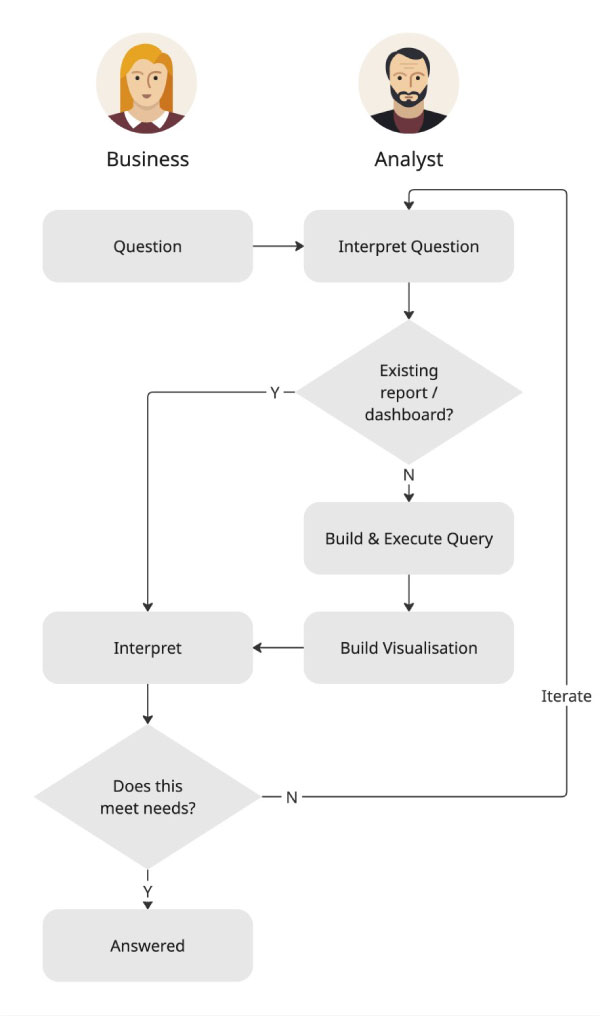
Traditional business intelligence follows a rigid, linear process that creates bottlenecks and often involves a number of handovers and dependencies between teams. The traditional flow involves someone with a business question working with a technical BI or Data Analyst, explaining their question or business problem (usually very poorly), their analyst interpreting this, going away and building queries and data visualisations, sharing this back and iterating on this cycle until their original question is answered.
This approach creates dependencies between those with business questions and those with the technical skills to be able to answer them, creating lost in translation problems and limits real unfettered exploration of data.
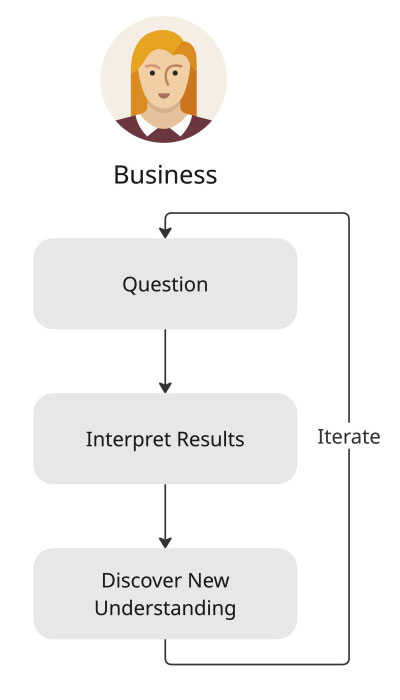
The improvisation aspect is crucial. Where traditional analytics asks static, constrained “What happened, why?” questions, vibe analytics allows for collaborative exploration to uncover both new answers as well as new questions. This combination of human intent and curiosity, with machine pattern recognition often reveals new insights that neither alone would discover.
Democratising Data Access
One of the most significant implications is the democratisation of analytical capabilities. Business users can increasingly explore and understand their own data without waiting for intermediaries to translate their questions into technical queries and data visualisations. This shift eliminates the frustrating hop between business needs and technical implementation.

The Evolution of BI and Data Analytics Roles
While this shift doesn’t eliminate the need for traditional BI and Data Analyst roles, it will transform some roles in two critical directions:
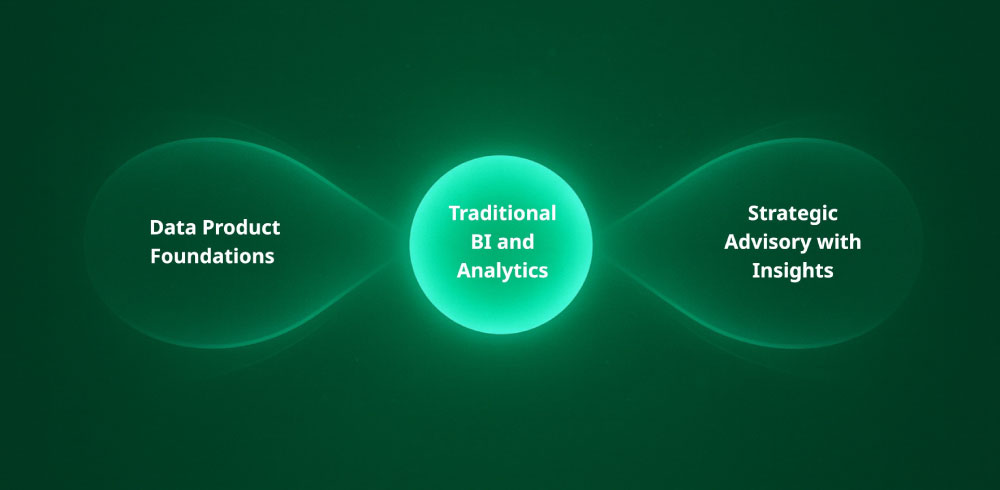
Second, some will evolve toward strategic advisory roles using the insights gained. Instead of spending time translating business questions into technical queries, they can focus on helping organisations understand what their new found answers mean and how to act on insights.
There is also the ongoing need for deep Data Analytics skills to validate data, assumptions and insights for high impact decisions and actions that may follow from discoveries made through.
Critical Success Factors
Michael Schrage shared the below caution in his MIT Sloan Management Review article: Vibe Analytics: Vibe Coding’s New Cousin Unlocks Insights:
- Data foundations – Ensure the underlying data is of high quality; good metadata is present including field level names with meaningful descriptions and synonyms if relevant; semantic and metric layers are used as required.
- Start small – Provide focused data with specific use cases in mind. Start with a small set of limited questions that you anticipate being asked, and then evolve and grow that as required.
- Provide good examples and instructions – When setting up the space for users to interact with, provide a limited, focused set of instructions including example sql queries where possible.
- Self test and iterate – Have a suite of test benchmark questions, and fine tune responses with specific feedback and feedback until you are getting reliable responses
- Test with a small group of users – Choose a small group of users to initially beta test with. Ensure they know their job is to help evaluate and train the model. Set expectations on the scope of the questions they should be focussing on and have them upvote, downvote and provide additional feedback on responses
- Monitor in production – Ensure ongoing ownership of model is clear and that performance against benchmarks are monitored. Make sure users are using common sense and know the limitations of this approach. If critical decisions are being made based on responses, ensure results are validated accordingly.
Where to from here?
Success requires both technical capability and cultural adaptation. Teams must learn to ask better questions, follow unexpected threads, and synthesise insights from this conversational exploration.
As we see capabilities continually improving with every model release, vibe analytics offers a glimpse into a future where data becomes a collaborative partner in discovery rather than a passive resource to be queried.
This shift mirrors the evolution from manual queries to automated monitoring systems, but with exponentially more sophistication. Agentic Analytics doesn’t just flag predetermined thresholds, it can dynamically discover what should be monitored based on evolving business contexts and emerging data patterns.
Beyond making people aware of actual or forecasted changes in data, agentic integration also allows for automated hypothesis testing as well a strategy formulation. Instead of a human having to define questions, create a hypothesis to explain causality, and then work to formulate a business strategy to react to the change, an agent might observe:
- Observation: Customer acquisition costs increased 13% in Q3, but this correlates with higher lifetime value.
- Hypothesis: We’re attracting more premium customers.
- Validation: Testing through cohort analysis and behavioural segmentation, calculating customer lifetime value trajectories with 90% confidence intervals to validate the premium customer thesis
- Recommendation: Allocate more resources to acquisition channels or campaigns that are driving premium customers, as higher lifetime value offsets the increased acquisition costs.
- Action: Run channel-level analysis to identify which platforms (e.g., paid search, social ads) are over-indexed for attracting high-value customers. Pilot A/B tests to validate strategy.
This blogpost was originally posted on Bryn’s LinkedIn in August 2025 and Bryn gave a Deep Dive session on this topic at AgileAus26. Images were sourced from the original LinkedIn post.

Stay in the loop
To receive updates about AgileAus and be subscribed to the mailing list, send us an email with your first name, last name and email address to signup@agileaustralia.com.au.